


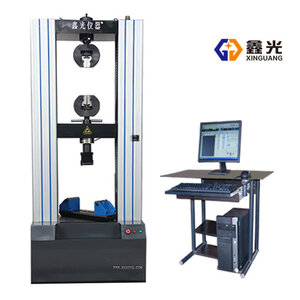
Selecting the appropriate universal testing machine (UTM) for your laboratory is a critical decision that directly impacts the quality and reliability of your material testing results. With a wide range of configurations available — from single-column benchtop units to dual-column floor-standing systems — understanding the key selection criteria is essential for making an informed investment.
Understanding Force Capacity and Precision Grade
The first and most fundamental consideration is the force capacity of the UTM. Testing machines are available in various ranges, from 1 kN for delicate materials like films and textiles, up to 600 kN or more for metals and structural composites. A general rule of thumb is to select a machine whose maximum capacity is approximately twice the maximum force you expect to apply during testing. This ensures the load cell operates within its optimal range, typically 10% to 90% of full scale, where accuracy is highest.
Precision grades are defined by international standards such as ASTM E4, ISO 7500-1, and GB/T 16825. Class 0.5 and Class 1 are the most common grades used in industrial laboratories. Class 0.5 machines — offering accuracy within ±0.5% of the indicated force value — are recommended for research and development settings where data precision is paramount. Class 1 machines (±1% accuracy) are generally sufficient for routine quality control applications. Always verify that the machine’s calibration certificate matches the grade your industry requires.
Speed Requirements and Application Scope
Different materials require different testing speeds. High-elongation materials such as rubber and plastics may require crosshead speeds of up to 1000 mm/min, while rigid materials like metals and ceramics are typically tested at speeds below 50 mm/min. A versatile UTM should offer a wide speed range — from as low as 0.001 mm/min for creep testing to at least 500 mm/min for tensile testing of polymers. Encoder-based speed control systems provide better accuracy than open-loop alternatives.
Consider also the types of tests you will perform. Modern UTMs support multiple test modes: tensile, compression, flexural (3-point and 4-point bending), peel, tear, and cyclic fatigue testing. A modular design with interchangeable grips and fixtures allows the same base frame to accommodate diverse applications, maximizing the return on your investment.
Software, Data Acquisition, and Connectivity
The software ecosystem is the backbone of modern UTM operation. Look for a platform that offers real-time data visualization, customizable test methods, automatic calculation of material properties (yield strength, tensile modulus, elongation at break), and comprehensive reporting capabilities. The ability to export raw data in CSV, XML, or database-compatible formats is essential for integration with Laboratory Information Management Systems (LIMS).
For laboratories pursuing Industry 4.0 readiness, connectivity features such as Ethernet, RS-232, and USB interfaces are important. Some advanced models now offer OPC-UA protocol support for direct integration with MES and ERP systems, enabling automated data collection across the production chain.
Frame Rigidity and Alignment
A rigid load frame minimizes deflection under load, ensuring accurate strain measurements. Dual-column frames offer superior lateral stiffness compared to single-column designs and are preferred for testing stiff materials or when high lateral loads are expected. Load frame stiffness should be specified by the manufacturer in kN/mm. Additionally, axial alignment — the concentricity of the upper and lower grips — must meet ASTM E1012 requirements for accurate modulus measurements, particularly when testing metals.
Total Cost of Ownership
Beyond the initial purchase price, consider calibration service costs, availability of replacement parts, warranty coverage, and training requirements. Leading manufacturers offer on-site calibration services and extended warranties that reduce long-term operational risk. A mid-range UTM from a reputable supplier, properly maintained, typically serves reliably for 10-15 years. Investing in a quality machine with adequate future-proofing — such as extra load cell channels, auxiliary encoder inputs, and software upgrade paths — pays dividends over the equipment lifecycle.
Choosing the right universal testing machine requires balancing technical specifications, standard compliance, software capabilities, and budget. By systematically evaluating force capacity, precision grade, speed range, frame rigidity, and total cost of ownership, laboratory managers can make a confident decision that serves their testing needs for years to come.